Welcome to Hello World!
Here is a demo of code highlight for python:
def cnn_model_fn(features, labels, mode):
  """Model function for CNN."""
  # Input Layer
  # Reshape X to 4-D tensor: [batch_size, width, height, channels]
  # MNIST images are 28x28 pixels, and have one color channel
  input_layer = tf.reshape(features, [-1, 28, 28, 1])

  # Convolutional Layer #1
  # Computes 32 features using a 5x5 filter with ReLU activation.
  # Padding is added to preserve width and height.
  # Input Tensor Shape: [batch_size, 28, 28, 1]
  # Output Tensor Shape: [batch_size, 28, 28, 32]
  conv1 = tf.layers.conv2d(
      inputs=input_layer,
      filters=32,
      kernel_size=[5, 5],
      padding="same",
      activation=tf.nn.relu)

  # Pooling Layer #1
  # First max pooling layer with a 2x2 filter and stride of 2
  # Input Tensor Shape: [batch_size, 28, 28, 32]
  # Output Tensor Shape: [batch_size, 14, 14, 32]
  pool1 = tf.layers.max_pooling2d(inputs=conv1, pool_size=[2, 2], strides=2)

  # Convolutional Layer #2
  # Computes 64 features using a 5x5 filter.
  # Padding is added to preserve width and height.
  # Input Tensor Shape: [batch_size, 14, 14, 32]
  # Output Tensor Shape: [batch_size, 14, 14, 64]
  conv2 = tf.layers.conv2d(
      inputs=pool1,
      filters=64,
      kernel_size=[5, 5],
      padding="same",
      activation=tf.nn.relu)

  # Pooling Layer #2
  # Second max pooling layer with a 2x2 filter and stride of 2
  # Input Tensor Shape: [batch_size, 14, 14, 64]
  # Output Tensor Shape: [batch_size, 7, 7, 64]
  pool2 = tf.layers.max_pooling2d(inputs=conv2, pool_size=[2, 2], strides=2)

  # Flatten tensor into a batch of vectors
  # Input Tensor Shape: [batch_size, 7, 7, 64]
  # Output Tensor Shape: [batch_size, 7 * 7 * 64]
  pool2_flat = tf.reshape(pool2, [-1, 7 * 7 * 64])

  # Dense Layer
  # Densely connected layer with 1024 neurons
  # Input Tensor Shape: [batch_size, 7 * 7 * 64]
  # Output Tensor Shape: [batch_size, 1024]
  dense = tf.layers.dense(inputs=pool2_flat, units=1024, activation=tf.nn.relu)

  # Add dropout operation; 0.6 probability that element will be kept
  dropout = tf.layers.dropout(
      inputs=dense, rate=0.4, training=mode == learn.ModeKeys.TRAIN)

  # Logits layer
  # Input Tensor Shape: [batch_size, 1024]
  # Output Tensor Shape: [batch_size, 10]
  logits = tf.layers.dense(inputs=dropout, units=10)

  loss = None
  train_op = None

  # Calculate Loss (for both TRAIN and EVAL modes)
  if mode != learn.ModeKeys.INFER:
    onehot_labels = tf.one_hot(indices=tf.cast(labels, tf.int32), depth=10)
    loss = tf.losses.softmax_cross_entropy(
        onehot_labels=onehot_labels, logits=logits)

  # Configure the Training Op (for TRAIN mode)
  if mode == learn.ModeKeys.TRAIN:
    train_op = tf.contrib.layers.optimize_loss(
        loss=loss,
        global_step=tf.contrib.framework.get_global_step(),
        learning_rate=0.001,
        optimizer="SGD")

  # Generate Predictions
  predictions = {
      "classes": tf.argmax(
          input=logits, axis=1),
      "probabilities": tf.nn.softmax(
          logits, name="softmax_tensor")
  }

  # Return a ModelFnOps object
  return model_fn_lib.ModelFnOps(
      mode=mode, predictions=predictions, loss=loss, train_op=train_op)
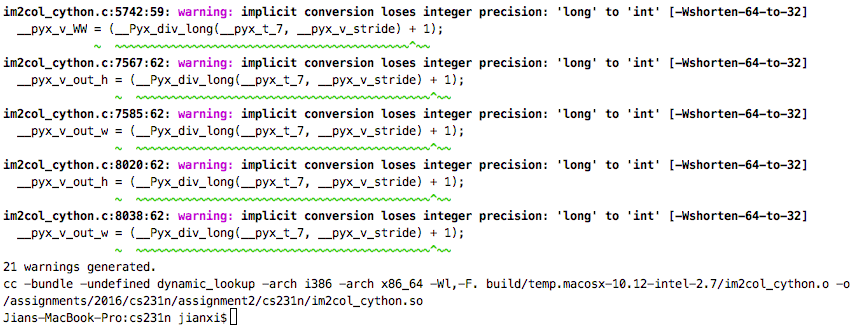
Here is a image resource demo